Oil: supply growth to outpace demand, limiting prices
In a dynamic world where the energy mix of consumption and demand continues to evolve and energy efficiency is being improved, oil remains an important part of our lives.
The global oil market is currently navigating a complex landscape shaped by both supply and demand dynamics, as well as geopolitical and policy influences. On the supply side, the Organization of the Petroleum Exporting Countries (OPEC), of which Saudi Arabia is a leading member, has maintained a strategy of keeping oil supply well balanced, aiming to support prices.
However, this approach is being counterbalanced by a recent agreement by OPEC+ (which combines OPEC with a wider group of oil-producing countries) to marginally increase output. This increase, while not dramatic on its own, is compounded by other oil-producing regions, particularly in the Americas and the Middle East, ramping up their production.
Oil inventories are expected to rise
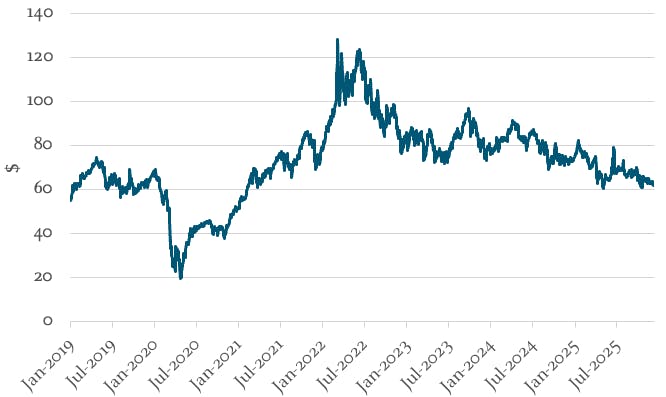
As a result of the factors, oil inventories are expected to rise, signalling a shift toward a more abundant supply environment. Notably, despite ongoing sanctions, Russian oil continues to flow into global markets, often at discounted prices, which has helped maintain overall supply volumes and exerted downward pressure on prices.
On the demand side, growth remains tepid. Consumption in advanced economies is anticipated to remain stable, while China’s demand growth is moderating due to the accelerated adoption of electric and hybrid vehicles. In contrast, India is expected to see continued demand growth, driven by increased consumption of liquefied petroleum gas (LPG), gasoline, naphtha (a type of hydrocarbon mixture), and diesel.
Supply growth is set to outpace demand. The International Energy Agency (IEA) anticipates an annual surplus of around 4 million barrels per day in 2026, which is significantly higher than the surplus seen during the 2020 pandemic.
Lower price expectations for 2026
This combination of surging supply and sluggish demand is generating a global oil glut, leading to lower price expectations for 2026. Recent market developments, such as unsold crude cargoes in the Middle East and increased volumes of oil stored in tankers at sea, further support the emergence of this surplus. Meanwhile, US policy under President Trump is focused on pulling inflation down, with oil prices being a key component of the inflation basket and the experience of inflation.
Chart 1: The Brent crude oil futures price has been gradually falling
Source: Macrobond, J.P. Morgan Personal Investing. Data as at 10 December 2025.
Gold: central bank buying a key factor
Writing here on the cusp of December 2025, it’s safe to say that gold is ‘gathering itself’ after a blistering rally through much of the past two years. While down over the year to the end of November, the US dollar is broadly up over the past two months. Questions remain over a more sustained revival in the dollar in the absence of credible alternatives to the currency.
And while we do not find this to be a central theme for movements in gold in the near term, what we find more credible is the purchasing power of sovereign money. That is, central bank buying. Central banks own around 35,000 tons of the metal and have an inelastic approach to buying, i.e. they purchase regardless of price level. This price-insensitive allocation is a massive driver, much differentiated from the investor component of buying that we see in exchange traded funds (ETFs), gold futures – contracts to buy/sell gold at a set price – or physical gold bars. As central banks reduce US dollar reserves, the preference for gold is expected to be sustained.
What an allocation to gold can provide
Amid worries spanning US current and future fiscal position, inflation, concerns around an artificial intelligence (AI) bubble, policy and geopolitical uncertainty, having an allocation to gold can increase portfolio resilience. It is also our expectation that the occurrence of further events that erode broad investor confidence will be an aid to gold.
However, it’s important to note that foundational to our positive view is central bank buying. Should anything change with this buying behaviour, it is our expectation that it could substantially impact the gold price, as the central banks' price-insensitive demand is crucial.
We cannot discuss gold without looking at the supply side too and the reality of very inelastic supply. Mining cannot easily respond to higher prices and some analysts expect a plateauing of reserves, at least in the near term. Technological innovation can yet unlock new methods of mining that can increase supply in the future. However, our view is that for 2026, the continued price appreciation of gold is our base case, and is reflected in our allocation to ETFs that invest in the metal.
Chart 2: Who's buying gold? Data shows central banks accounted for 17-19% of all gold bought so far in 2025
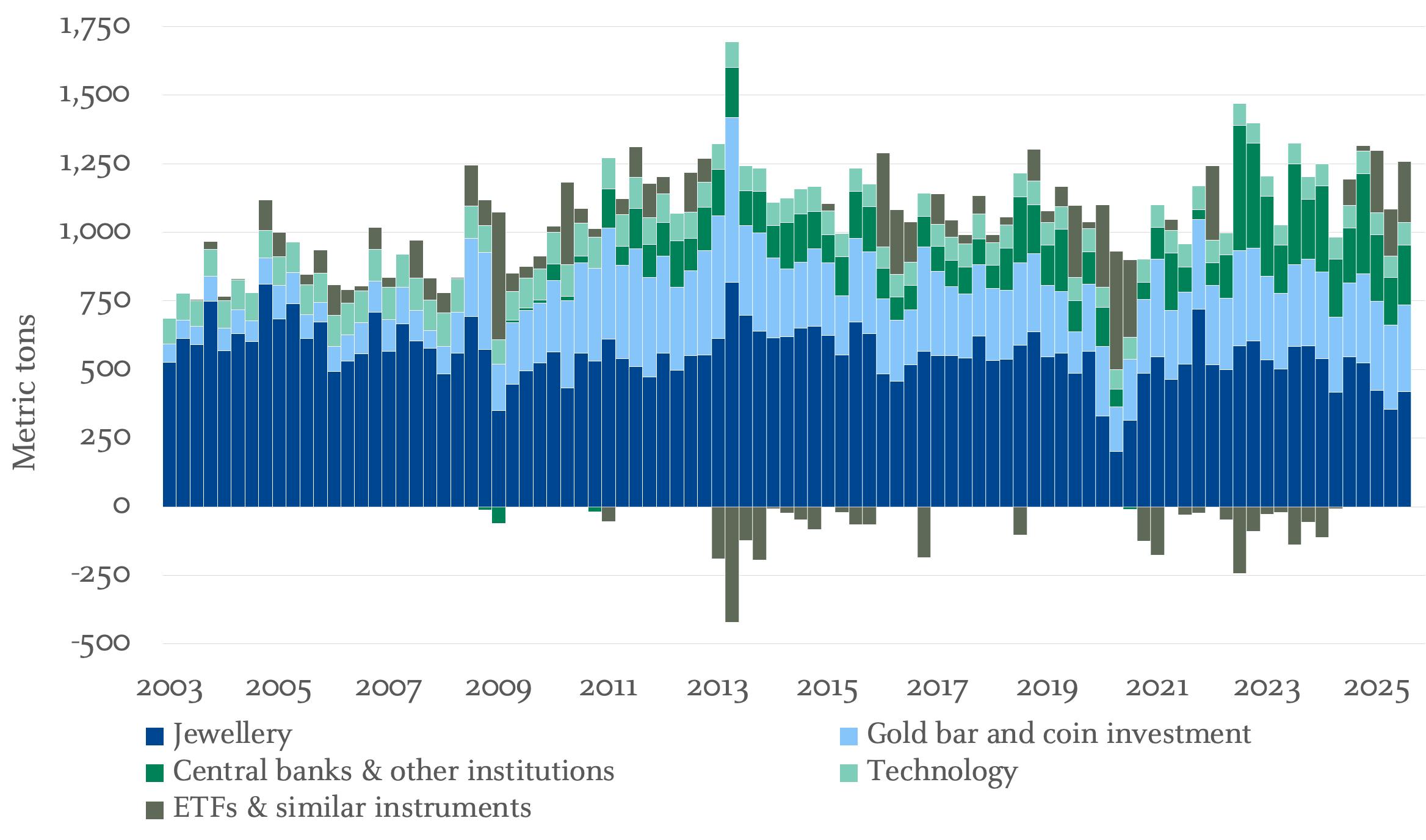
Source: Macrobond, J.P. Morgan Personal Investing. Data as at 30 September 2025. Statement reflects first three quarters of 2025. Each vertical bar reflects gold consumption over one quarter period, with the different colours splitting consumption by the type of buyer.
About this update: This video was filmed on 8 December 2025.
Source for the Outlook data: MacroBond, J.P. Morgan Personal Investing and Bloomberg.
Risk warning
As with all investing, your capital is at risk. The value of your portfolio can go down as well as up and you may get back less than you invest. Past performance and forecasts are not a reliable indicator of future performance. We do not provide investment advice in this update. Always do your own research.