In recent years, short-term interest rates and longer-term bond yields – the level of income paid to bondholders – have normalised after a decade and a half at extraordinarily low levels. The 2008 global financial crisis cast a very long shadow into the future as the global banking system repaired itself.
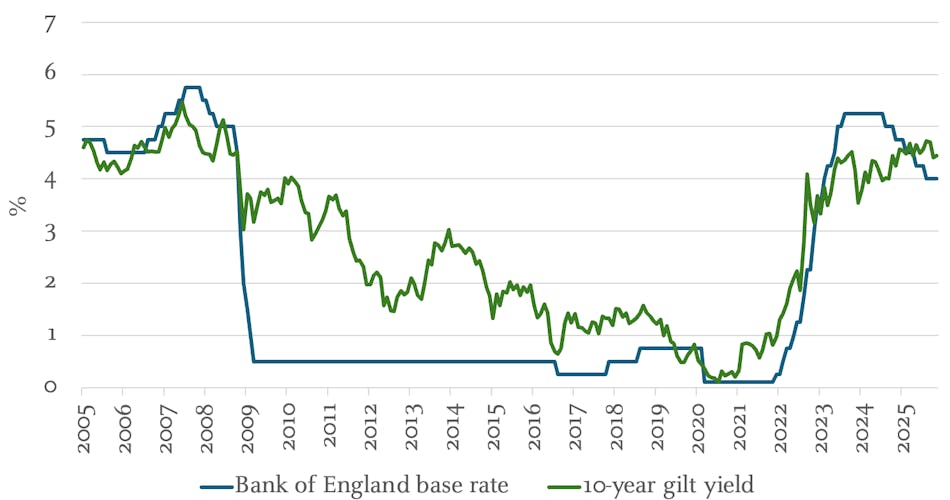
The healing period was capped off with the inflation bubble following the 2020 COVID-19 shutdown, with inflation supercharged by the impact on energy prices from Russia’s 2022 invasion of Ukraine. This can be seen in chart 1.
Chart 1: 10-year gilt yields have risen to a more ‘normal’ level alongside interest rates
Source: Macrobond, J.P. Morgan Personal Investing. Data as of 28 November 2025. Past performance is not a reliable indicator of future performance.
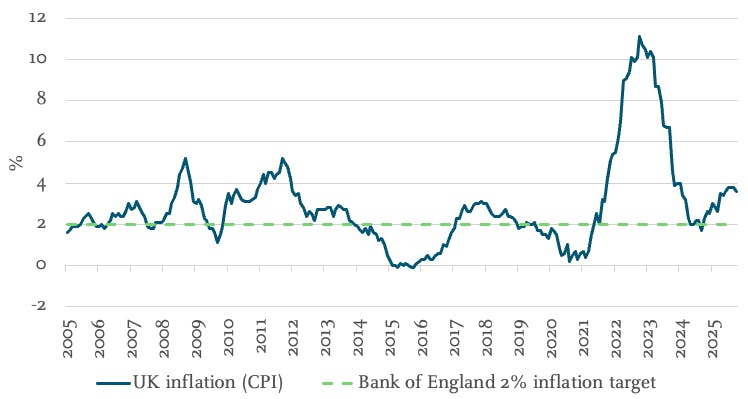
Chart 2: CPI returning to around the Bank of England’s 2% long term policy target
Source: Macrobond, J.P. Morgan Personal Investing. Data as of 31 October 2025.
Enjoying better yields in balanced portfolios
2026 stands to be a year where bond yields make a positive contribution to portfolio income. As seen in chart 2, the price shocks of 2021-23 have dissipated and inflation has returned to around the Bank of England’s longer-term 2% target.
A key factor here is that bonds and inflation are highly interlinked. Bond prices are inversely correlated with bond yields (and inflation), meaning when inflation is high, bonds typically suffer. We think that continued moderate inflation in 2026 will prevent the need for overly price-disruptive rises in bond yields.
This inflation moderation also impacts the diversifying relationship between bond prices and equity prices. When the inflation “genie is back in the bottle”, i.e. we are no longer seeing the rapid price spikes of 2021-23, balanced equity-bond portfolios enjoy the diversification benefits of negative bond-equity correlation. With this diversification benefit added to bond income, bonds are expected to play a helpful role in investment portfolios in 2026.
Policy has normalised as global growth improves
Geopolitics took on a more overt economic strategy early this year, with President Trump seeking to reset all bilateral trade with the United States. But a resulting trade and growth shock, widely expected after this policy move, has not eventuated.
Partly, this is because other growth drivers – such as business investment and wages growth – were simultaneously delivering a cyclical uplift. As 2025 progressed, growth fears dissipated and stock markets rebounded.
Fiscal policy has responded to geopolitics
Very long-term government bond markets have become increasingly sensitive to the use of fiscal policy to meet geopolitical threats. Defence budgets are expanding to meet military threat and economic polarisation is causing governments to back home-grown industries.
Such spending needs to be financed and bond markets have responded by demanding a higher return on very long-term issuances. Some of this spending will be financed by the more positive growth environment we expect to unfold in 2026. One further consequence of continued economic growth and looser fiscal discipline is that we expect both to benefit corporate bonds relative to their government bond counterparts.
About this update: This video was filmed on 8 December 2025.
Source for Outlook data: MacroBond, J.P. Morgan Personal Investing and Bloomberg.
Risk warning
As with all investing, your capital is at risk. The value of your portfolio can go down as well as up and you may get back less than you invest. Past performance and forecasts are not a reliable indicator of future performance. We do not provide investment advice in this update. Always do your own research.