Managing portfolios through the early-November AI sell-off
8 min

Early November saw a sharp dip in tech stocks as markets digested the potential implications of the US midterm election results. Since then, we have seen conditions stabilise. We explain what happened, how we have been proactively managing portfolios and the key factors to remember in any short-term period of market volatility.
What happened in equity markets in early November?
There has been a meaningful sell-off in technology stocks since Thursday 5 November – the day after the US midterm election results were announced. The impact has been particularly pronounced in the technology sectors of both the US and Asia, but the sell-off also spread to other sectors within the S&P 500 – a leading US stock market index – and to other regions. Among the more resilient geographic regions was Europe, which has held up relatively well by comparison.
This sell-off has occurred over a relatively short period. The tech-heavy Nasdaq was perhaps the most affected major index. It reached an all-time high in early October and then fell approximately 15% from that peak to 6 November. The broader S&P 500 experienced a smaller drawdown of around 5-6% from its peak over a similar period.
It is often difficult to identify a single cause for a sell-off. The ‘Blue Wave’ in the midterm elections raised concern that Democrats would take a stricter approach to legislation related to artificial intelligence (AI) and data centres, potentially reducing investment in the sector and affecting the profitability of some technology companies. In November, some large investors such as hedge funds using ‘leverage’ (where borrowing is used to increase exposure to assets) significantly reduced their holdings in risky assets after a difficult October. Looking at other similar periods of activity, it was their largest bout of selling since the COVID-19 period. Additionally, US retail investors added to the sell-off by reducing their portfolio holdings after the election, though this activity may prove short-lived. When higher volumes of selling coincide, it pushes down the prices of the assets being sold.
How are we managing portfolios through this period?
Our view is that the technical factors mentioned above may have contributed to the sell-off and investors with a long-term horizon could benefit from the current environment. Expectations for US economic growth and overall corporate earnings remain positive, and in late-October we took the opportunity to invest some of the cash we had held back since the summer as prices had dipped in some asset classes we favour. We have since put more of our cash to work by adding to certain positions across equity and bond markets, as we remain confident that the environment is favourable for diversified portfolios. We believe patient investors who look beyond short-term noise will be rewarded.
Our investment strategies are founded on long-term conviction, which we evaluate regularly. Markets can correct themselves quickly and it is therefore usually a bad idea to abandon an investment thesis in response to short-term volatility.
Our investment team has designed a strategic asset allocation (SAA) framework which serves as the ‘neutral state’ for portfolios. The SAA is a template for what we believe is a well-diversified global portfolio with a good balance of risk and return in normal conditions, according to past data. Against this, the team makes tactical portfolio adjustments where needed – constantly assessing current market conditions and macroeconomic data. Media commentary on the markets can spark anxiety among investors, but our investment team is experienced in managing portfolios through volatility.
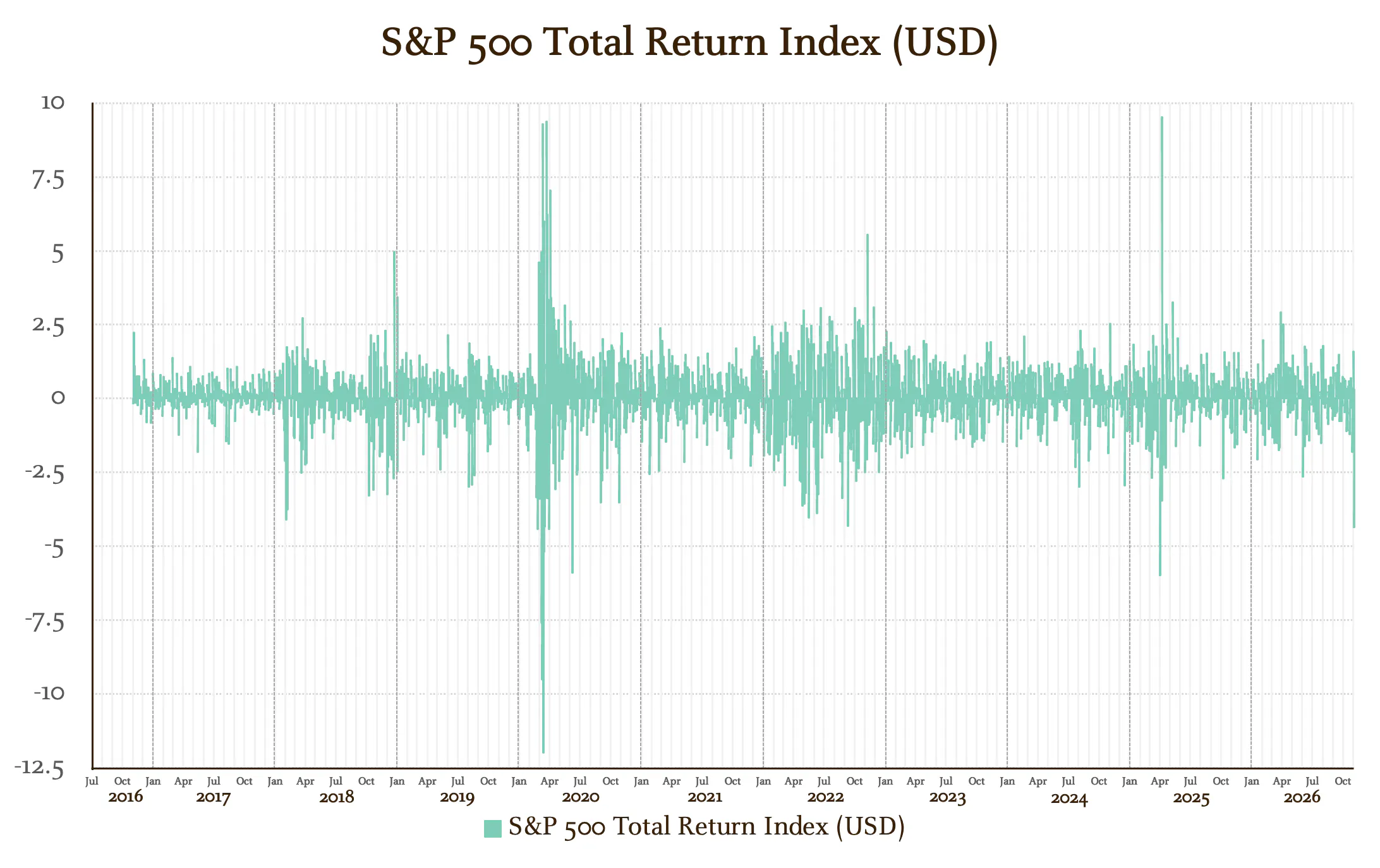
The below chart demonstrates, price movements during periods of volatility.
Market volatility tends to result in significant daily price movements, both up and down
Source: Macrobond, J.P. Morgan Personal Investing. Data as of 6 November 2026.
The investment team continues to actively manage portfolios for its Fully Managed, Socially Responsible Investing and Thematic Investing clients. The Smart Alpha portfolios are actively monitored by the J.P. Morgan Asset Management team which provides guidance to our investment team on changes to portfolios based on market conditions, leveraging its deep research-driven insights. For Fixed Allocation clients, portfolios are adapted once a year.
How might you be affected by short-term volatility?
Not all instances of market volatility result in sweeping, long-term market sell-offs. Sometimes markets can rebound quickly after the dust settles. In this instance, we have already seen markets return to a more stable environment as investors took the weekend to pause and reflect.
In the short term, a market sell-off can negatively impact the value of your investments, but if you were to do nothing and check back on your portfolio value in a week or a month, the picture might look very different.
The extent to which an investor can be affected by a market downturn depends on a number of factors. We’ve listed some areas for consideration below.
Time horizon for investing
The shorter your time horizon, the more exposed you are to a market downturn. If you’re close to retiring, or are on the verge of putting your investments towards a significant outlay like a house deposit, a market downturn could cause some difficulty in the short term. It may therefore be a good idea to book a free call and speak to one of our wealth experts to discuss your options.
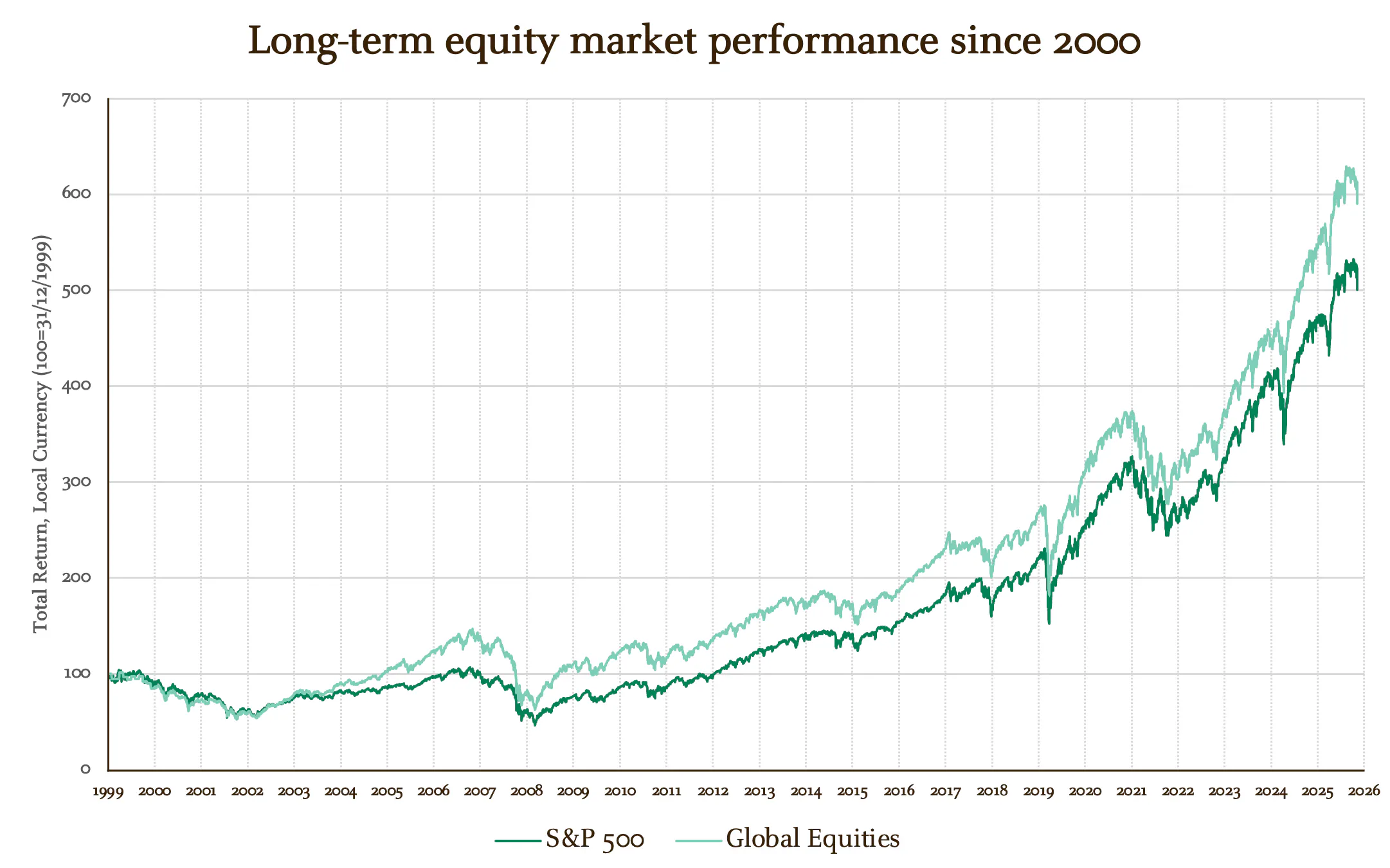
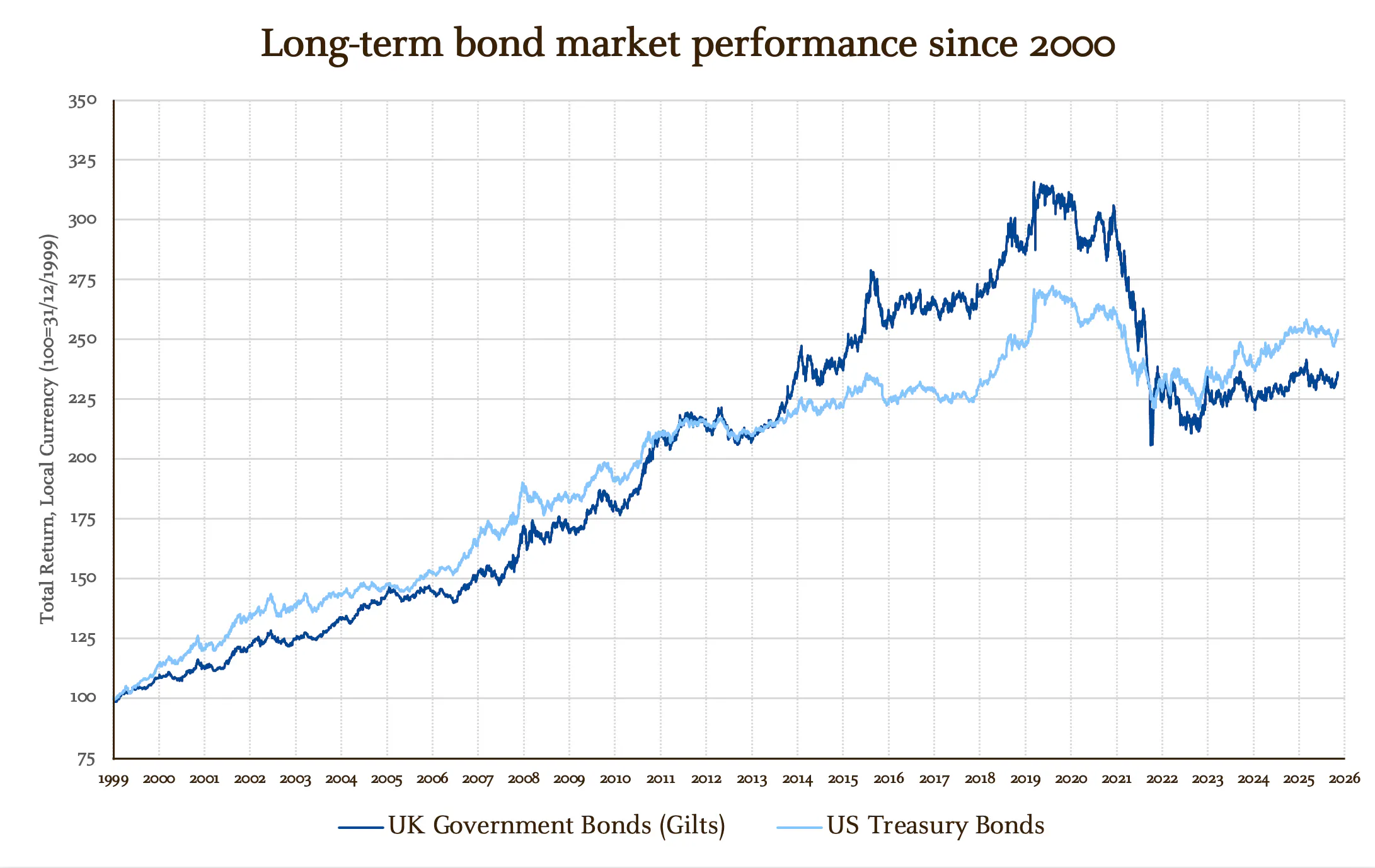
If you have a longer time horizon, history tells us that you are likely to have time for your investments to recover in value. Over the long term, equities and bonds have performed well for investors.
Source: Macrobond, J.P. Morgan Personal Investing. Data as of 6 November 2026.
Source: Macrobond, J.P. Morgan Personal Investing. Data as of 6 November 2026.
Risk profile of your portfolio
The higher the risk profile of your investment portfolio, the more likely it is that its value will fluctuate during a period of volatility. Portfolios with a higher risk level tend to have a higher proportion of equities, while lower-risk portfolios will have a greater allocation towards fixed income, including government debt. Lower-risk portfolios are not immune to the effects of market volatility, however, and it’s usually not a good idea to tinker with your risk level in an attempt to soften the blow of any market shock. It is disconcerting seeing investments fall, but changing risk levels based on market movements involves selling or buying, and effectively timing the market which is notoriously difficult.
Size of cash buffer
We are staunch advocates of people putting their savings to work. Keeping too much of your money in cash leaves it vulnerable to being eroded by inflation, while you may also miss out on gains that can be made through investing in financial markets (although be mindful that you could also lose money through investing).
That said, tying up too much of your money in investments could leave you with little room to manoeuvre should you suddenly need to support yourself or a loved one in a way that stretches beyond your normal income.
Cash and investments should work in harmony, and not in competition with each other. Having a safety net of cash can give you the confidence you need to invest, knowing that the value of your investments could fall.
You should have a rainy-day fund for potential financial emergencies, as you don't want to have to sell your investments at the wrong time in order to stay financially afloat during these periods. Your personal circumstances will dictate the amount of emergency cash that you need. We would usually suggest between three and six months’ essential spending.
Should you change the risk level of your managed portfolio?
We do not believe that it is normally a good idea to change your risk level in response to market volatility. We think that your risk level should match your risk profile rather than what is happening in the market. We complete a risk questionnaire with our clients every year to ensure that their risk level is at an appropriate setting for their circumstances.
While you can amend your risk level, it’s important to recognise that by doing so, you are effectively trying to time the market, because sales and buys will be made as a result. We believe that predicting short-term movements in the market is very difficult, and clients who invest for the long term in a diversified portfolio with an appropriate risk level put themselves in the best position to achieve their financial goals.
What should you do if you're nervous about investing a lump sum?
Clients who are concerned about investing large lump sums during a period of volatility could explore the option of drip feeding into the market. Choosing between lump sum investing and drip feeding is a matter of personal preference, rather than one approach being better than the other.
Lump sum investing entails investing your money at one time, meaning that it is invested for the longest possible time. This does, however, mean that you are effectively timing the market.
Drip feeding, on the other hand, involves investing at intervals over a period of time. This smooths the entry point and reduces the market timing risk. However, the overall sum of money isn't invested for as long as a lump sum over the same period, given some of it sits on the sidelines before being invested at each interval.
This means that the money doesn't benefit from compounding for as long as a lump sum would. Compounding is what happens when you keep any returns invested to earn more on your new, higher balance. In other words, you can make money on money you've already made.
If you’re feeling nervous about how recent financial market performance could affect your investment goals, our team is here to talk.
Risk warning
The longer you stay invested, the more time your money has to grow. Investments go up and down, so at times you could get back less than you invest. Past performance and forecasts are not reliable indicators of future performance. Thematic investing carries specific risks and is not for everyone. We do not provide investment advice in this article. Always do your own research.